
Sources, Interviews and AI Take Focus on Day Three of YHMS Investigative Journalism Workshop
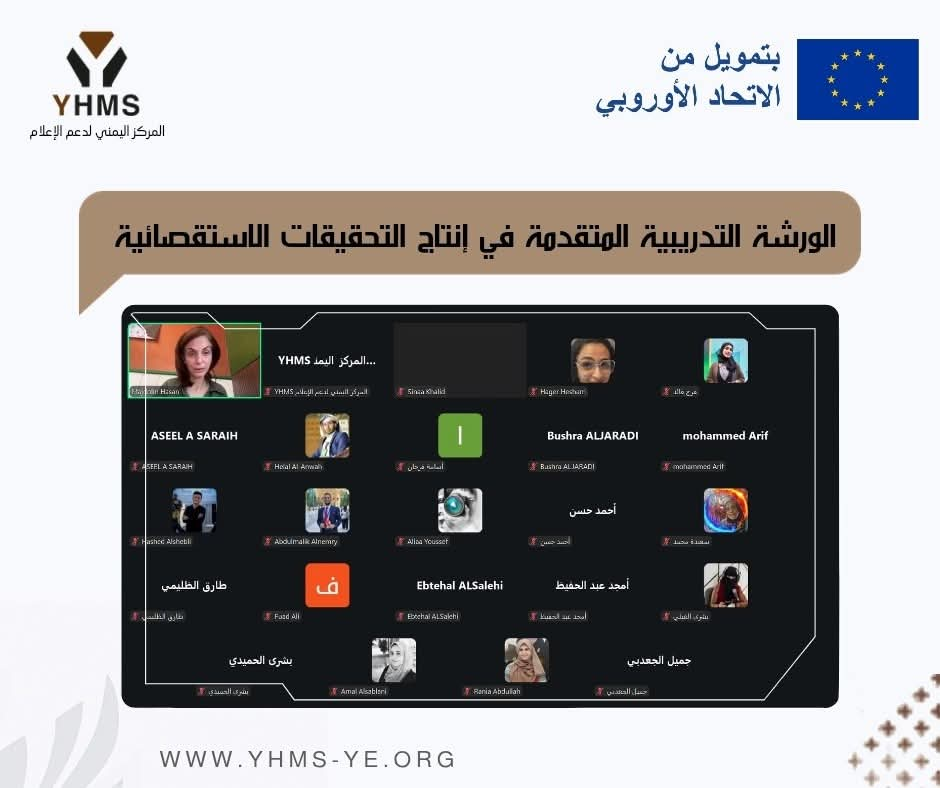
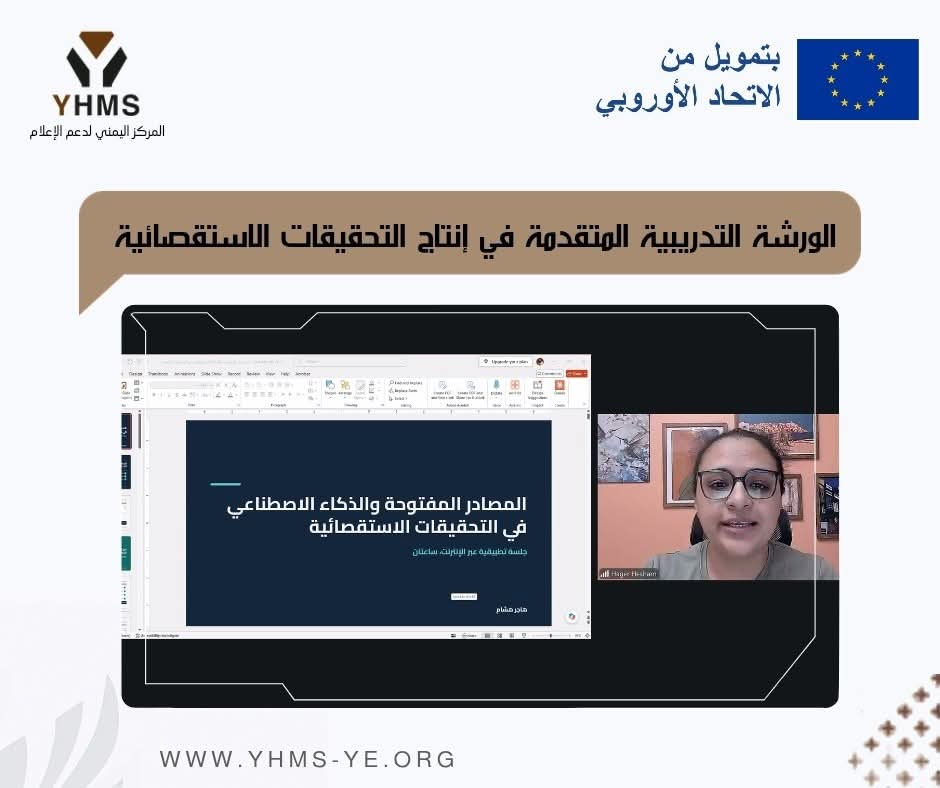
Day three of the advanced investigative journalism workshop, organised by the Yemeni Hub for Media Support (YHMS) with support from the European Union Delegation to Yemen, explored working with sources, conducting interviews and obtaining information, alongside the use of open sources and artificial intelligence in investigative reporting. The two sessions were led by trainers Majdoline Hassan and Hajar Hisham.
Majdoline Hassan: Sources, Interviews and Access to Information
In the first session, Majdoline Hassan discussed the importance of building a network of reliable sources, preparing for interviews and framing questions that elicit accurate, useful information rather than broad or leading responses.
The session focused on interview ethics, including respect for sources, transparency about the journalist’s identity and the purpose of the interview, obtaining consent where needed, avoiding deception or pressure, and accurately conveying statements and their context.
Participants also explored how to work with sensitive and difficult sources, build trust, protect identities when necessary and verify information against multiple sources and documents. The discussion emphasised professional principles for working with witnesses, victims and stakeholders.
Practical exercises covered developing investigative questions, preparing an interview plan and selecting opening, follow-up and verification questions, as well as managing conversations with sources reluctant to disclose information. Participants shared their experiences and the challenges of accessing information in complex environments, while the trainer offered guidance on documenting information and distinguishing accounts, indications and evidence.
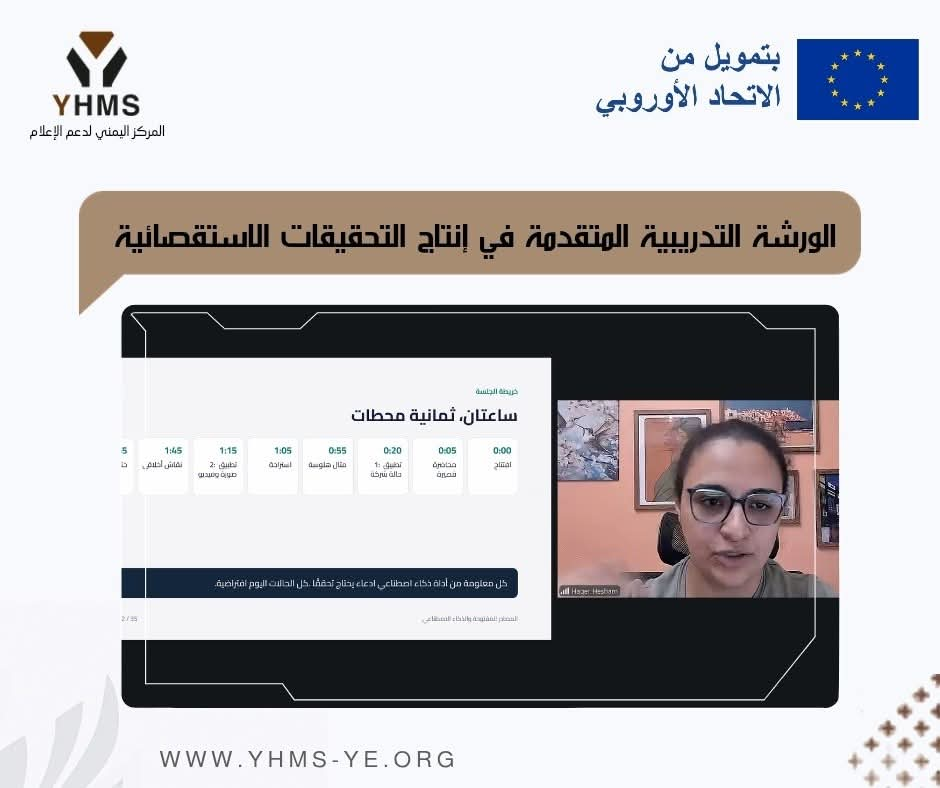
Hajar Hisham: Open Sources and Artificial Intelligence in Investigative Reporting
In the second session, Hajar Hisham introduced open sources and their importance for gathering and verifying information, as well as advanced search techniques across platforms. She emphasised documenting sources and checking their reliability before using them in an investigation.
The session examined how artificial intelligence can support investigative journalism through information searches, summaries of lengthy texts and reports, data analysis, and the development of research questions and investigative ideas. The trainer stressed that these tools assist journalists and do not replace professional verification or editorial responsibility.
Participants practised writing AI prompts and using advanced search techniques. They shared their experiences with these tools and discussed their limitations and challenges, particularly information accuracy, potential bias and the importance of not treating AI outputs as a definitive source without review and verification.
Day three formed part of the workshop’s efforts to equip journalists to produce accurate, professional investigations that combine reliable sources and verifiable evidence with the responsible use of open sources and artificial intelligence tools.

#InvestigativeJournalism #OpenSources #ArtificialIntelligence #YHMS #EuropeanUnion #Yemen